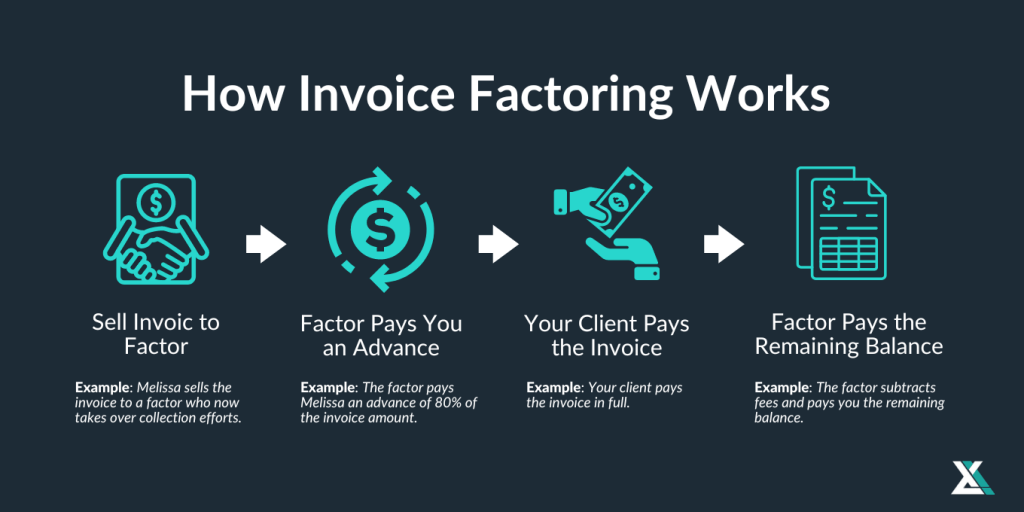
Invoice Factoring
What is Invoice Factoring:
Designed for small and medium-sized businesses to convert unpaid B2B invoices into immediate working capital.
Addresses cash flow bottlenecks caused by delayed customer payments.
Non-recourse factoring: Step By Step Capital assumes the risk of non-payment.
Key Features:
Businesses sell accounts receivable to Step By Step Capital at a discount rate (1%–5%).
Discount rate depends on invoice age, volume, and client credit quality.
Advances 80–95% of invoice value upon approval; remainder (minus fees) paid after client settles invoice.
Funds transferred via ACH or wire transfer within 24–48 hours of approval.
Purpose:
Provides liquidity for rapid scaling, bulk inventory purchases, hiring surges, or meeting payroll/supplier commitments.
Ideal for industries like manufacturing, staffing, and wholesale distribution.
Eligibility:
Based primarily on the creditworthiness of the business’s customers, not the business’s own financial history.
Minimum invoice value: $5,000; payment terms up to 90 days.
Requires high-quality receivables from creditworthy clients; high-risk payers may not qualify.
Application Process:
Simple online inquiry with details on business operations, average invoice values, and payment terms.
Pre-qualification followed by swift due diligence, including invoice verification and Notice of Assignment.
Streamlined, paper-light process to minimize administrative burdens.
Benefits:
Immediate cash flow without stringent credit checks or collateral requirements of traditional bank loans.
Enhances liquidity for growth opportunities without accruing debt or diluting equity.
Transparent, performance-based fees with no hidden charges.
Flexible scalability: handles monthly invoice volumes from $50,000 to several million.
No long-term contracts, offering freedom to adjust participation.
Strategic Advantages:
Frees businesses from collection hassles, allowing focus on core operations.
Converts static receivables into dynamic capital for innovation and resilience.
Supports sustainable expansion in competitive markets.